Bond Yields Surge as Inflation Fears Return
CONCERNS ABOUT PERSISTENT INFLATION PUSH GOVERNMENT BOND YIELDS HIGHER This…

This week markets were calmed by the prospect of a deal to reopen the Strait of Hormuz. The price of oil fell and UK gilt yields dropped slightly as the prospect of higher inflation faded. Hopes of a deal added to equity market positivity following some strong tech earnings updates, although there are still some concerns about the scale of AI investment. However, America has been excluded from the talks between Iran and Oman. This may help secure a short-term agreement but the US is further from its goals than ever and has shown its willingness to return to hostilities.
Meanwhile, the US Treasury’s interference in the currency markets is a big departure from its usual behaviour. The decision to prop up the yen is motivated by self-interest, rather than altruism. It wants to avoid any further upwards pressure on US government bond yields if the Bank of Japan sells some of its huge stock of Treasuries to fund its defence of the yen. In the meantime, the Federal Reserve’s policy of no communication with bond markets risks running against the Treasury’s efforts as US Treasury yields creep higher.
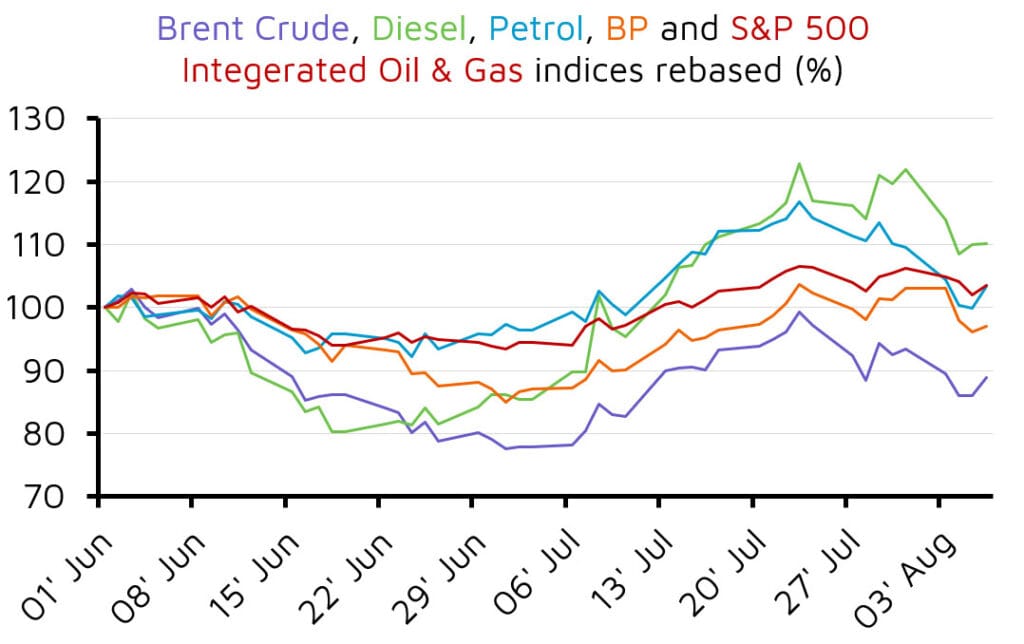
The price of Brent crude oil fell below $80 as markets assess the chances of Gulf oil and gas exports resuming. The US halted air strikes on Iran to allow room for negotiations. Despite no direct talks with the US, Oman and Iran have been trying to find a short-term deal to reopen the Strait of Hormuz. News of the negotiations helped government bonds to rally as fears of persistent inflation have faded.
BP, ExxonMobil and Chevron are the latest energy giants to announce record profits due to high oil and gas prices in the second quarter. BP’s quarterly profits were up 144% on last year as it announced plans to sell its North Sea operation. Chevron and Exxon reported profits of $12bn and $14bn, respectively, drawing criticism from US President Donald Trump due to the high cost of petrol and diesel in the US. Meanwhile, the surge in demand for electricity due to AI is being reflected in markets with US coal-fired power stations back in favour and US nuclear generator Westinghouse preparing for a stock market listing.
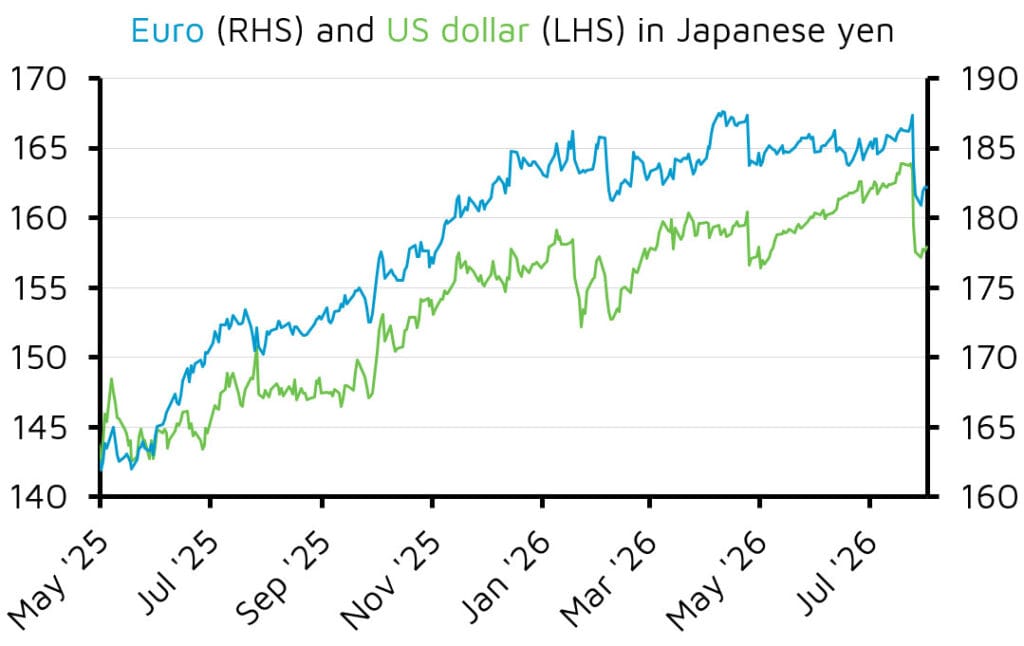
Japan and the US intervened in currency markets to protect the Japanese yen. Japanese interest rates are still just 1%, far below other major economies, which gives investors little reason to hold yen. By late July the yen was at its weakest against the dollar since 1986, pushing up the cost of imported food and fuel. The Bank of Japan bought yen to steady it, with little lasting effect. Surprisingly, the US Treasury then bought yen, the first time the two have acted together since the late 1990s.
Japan is the largest foreign owner of US government debt, holding roughly $1tn. If the BoJ sold those bonds to fund its defence of the yen, American borrowing costs, already the highest since 2007, would have risen further. The yen has since regained some ground and both sides promise to act again if necessary. But intervention delays the problem rather than solving it. Lasting strength needs higher Japanese rates, which markets now expect from October. Until then, currency and bond markets are likely to stay unsettled.
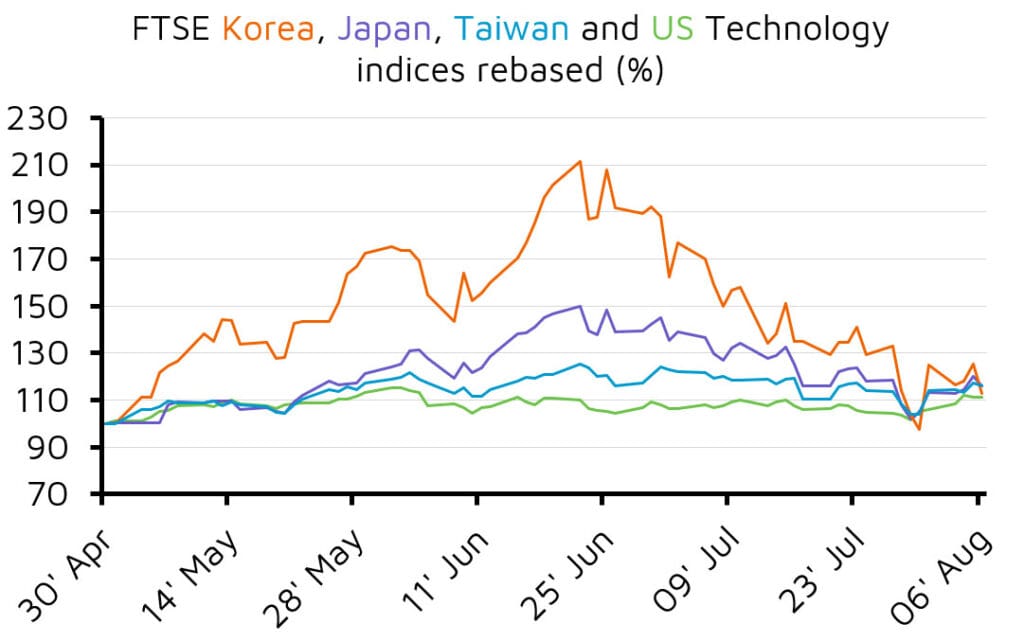
Technology shares experienced more volatility, but strong company results helped support a broader rally in global equity markets. Palantir’s second-quarter results beat expectations, with US sales rising 23%. AMD also delivered record quarterly revenue of $11.5bn, up 50% from a year earlier, as data-centre microchip sales doubled to $6.7bn. However, its shares fell as investors focused on the pace at which future AI investment will translate into earnings.
Amazon’s profits increased more than threefold, supported by growth in its cloud business. SoftBank also beat expectations due to gains in its technology investments. SpaceX released a positive first update with earnings higher than expected, but shares fell as it announced a big increase in its investment in AI. The positive earnings news improved investor sentiment after recent selling of tech stocks. Asian markets rebounded particularly strongly, led by semiconductor and AI-related companies, but US and European shares also gained.
Sources for charts: FE Analytics, Investing.com
This article contains general information only.
This is not a financial promotion and is not intended as a recommendation to buy or sell any particular asset class, security or strategy.
All information is correct as at 07/08/2026 unless otherwise stated. The expressed opinions are based on current market conditions, they may differ from those of other investment professionals and are subject to change without notice.
This communication contains information on investments which does not constitute independent research.
Published by our partners at FE Invest.
The value of your investments can go down as well as up, so you could get back less than you invested. Past performance is not a reliable indicator of future performance.