
Democrats win big, tech stocks tumble: what it means for markets
DEMOCRATS SWEEP TO MIDTERM VICTORY BUT MARKET FEARS APPEAR MISPLACED…

This week presented a mixed picture of investor appetite for technology stocks in general, and AI-linked stocks in particular. The AI lab Anthropic made a record stock market debut, with a higher listing price, more shares sold and a bigger valuation than expected. Its shares surged on their first day of trading. Earlier in the week, Nvidia, the linchpin of the AI industry, delivered a strong update despite the negative headlines surrounding it. Sales again grew faster than expected, and the company raised its growth forecast for the next quarter.
However, the positivity was short-lived. US and emerging market tech companies led the sell-off, but medium-sized and smaller companies were hit too. Defensive sectors such as utilities and healthcare also fell, and the slide in commodity prices dragged down miners and energy stocks. Although central banks appear more determined to fight inflation, government bonds gained as investors grew more cautious. That Anthropic set a record in these conditions shows investors still see AI’s long-term potential, even if they have many concerns about the short term.
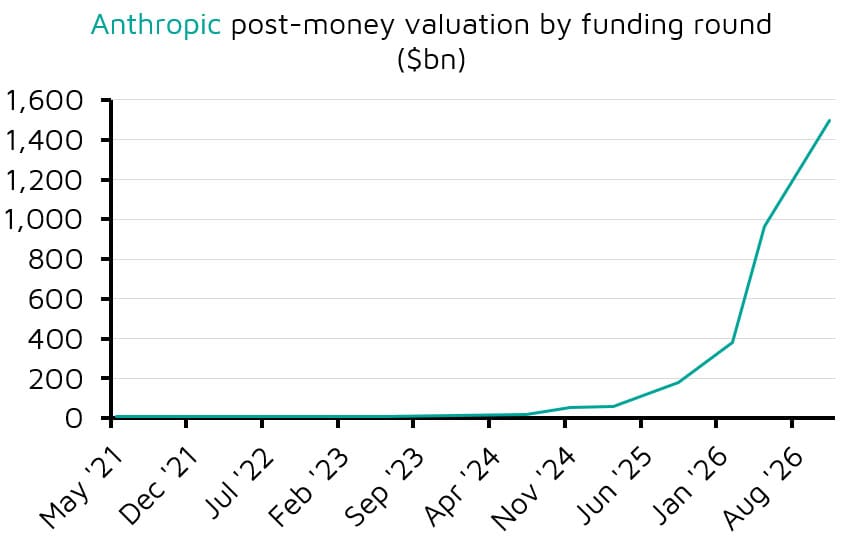
AI lab Anthropic rode the tidal wave of investor demand to a record-breaking stock market flotation. It sold 980m shares at $83 each, well above its published range of $70 to $78, raising about $81bn. That beats the $75bn raised by SpaceX in June, the previous record. Massive demand from retail investors was matched by heavy orders from institutions, giving the company a valuation of $1.5tn.
Nvidia also brought better news. Its latest results showed the company is still growing faster than expected, with third quarter sales double those of a year earlier, and it raised its forecasts for fourth quarter sales and profits. But the shares still closed 2.9% lower that day, and Jensen Huang’s resignation as chief executive last week continues to weigh. Elsewhere, the tech sell-off deepened. The Nasdaq 100 fell 6.9% this week and is more than 17% below its October peak. In Asia, chipmakers Samsung, SK Hynix and TSMC slid, and Taiwan’s market had its worst week since 1991.
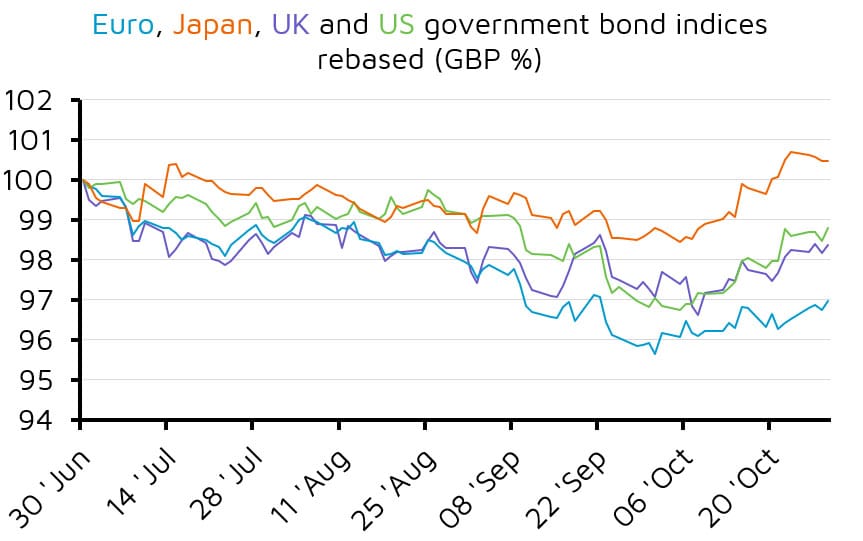
Investors spent the week betting that interest rates will climb further. US inflation beat forecasts in October, and almost all Federal Reserve officials expect more rises. The 10-year Treasury yield held near 5.1%, and government borrowing may keep it there. JPMorgan expects rich-world budget deficits to reach 5.5% of GDP this year, the widest outside a recession since 1945, and warns that rising rates are wearing away the growth that once kept such debts in check. The dollar rose to its strongest since April 2025, while gold, which pays no income, fell to a 14-month low, a third below January’s record.
Britain, which JPMorgan lists among the large economies needing the biggest budget repairs, is feeling both pressures. Two-year gilt yields topped 5% for the first time in over three years, and the 10-year sat near 5.3%. Inflation hit a one-year high of 3.6% in October, driven by petrol, but home-grown price pressures were softer than expected, so traders trimmed bets on a December rate rise, though they still expect three by June.
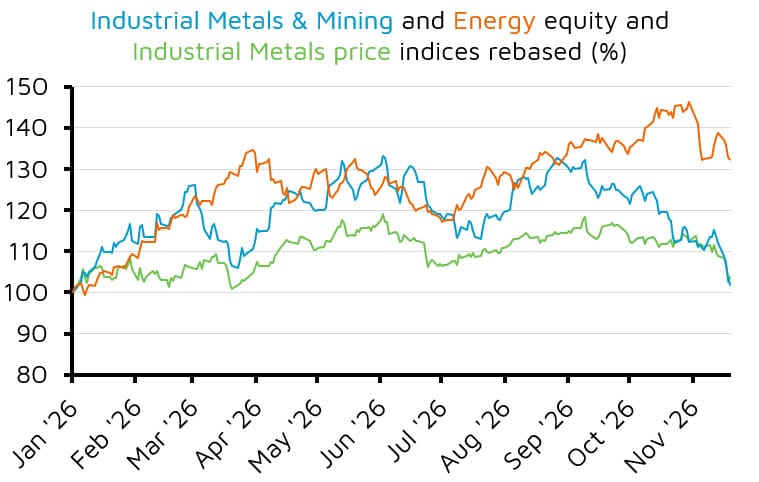
Copper and other industrial metals have fallen steeply as commodity investors expect the AI infrastructure boom to slow. The price of copper fell below $12,500 a tonne, a drop of around 8% this week and almost 15% down from its recent peak of $14,675 in late October. Other industrial metals have also fallen. Zinc is down 5%, aluminium has fallen 6% and tin is off by more than 15% in the last month. Shares of industrial metals and mining stocks have tracked the decline of commodity prices after outperforming for much of 2026.
Energy companies have also given back some of this year’s gains. Rising exports from the Persian Gulf and more production in other regions generated 2 million barrels a day of excess supply in October. Combined with hopes of an end to the war in the Middle East this caused Brent crude to fall to $91 a barrel. A decline in mining and energy weighed on equity markets from the UK and Europe to Australia.
Data sourced from FE Analytics, Pitchbook and Investing.com
Important Information
This article contains general information only.
This is not a financial promotion and is not intended as a recommendation to buy or sell any particular asset class, security or strategy.
All information is correct as at 21/11/2026 unless otherwise stated. The expressed opinions are based on current market conditions, they may differ from those of other investment professionals and are subject to change without notice.
This communication contains information on investments which does not constitute independent research.
Published by our partners at FE Invest.
The value of your investments can go down as well as up, so you could get back less than you invested. Past performance is not a reliable indicator of future performance.